
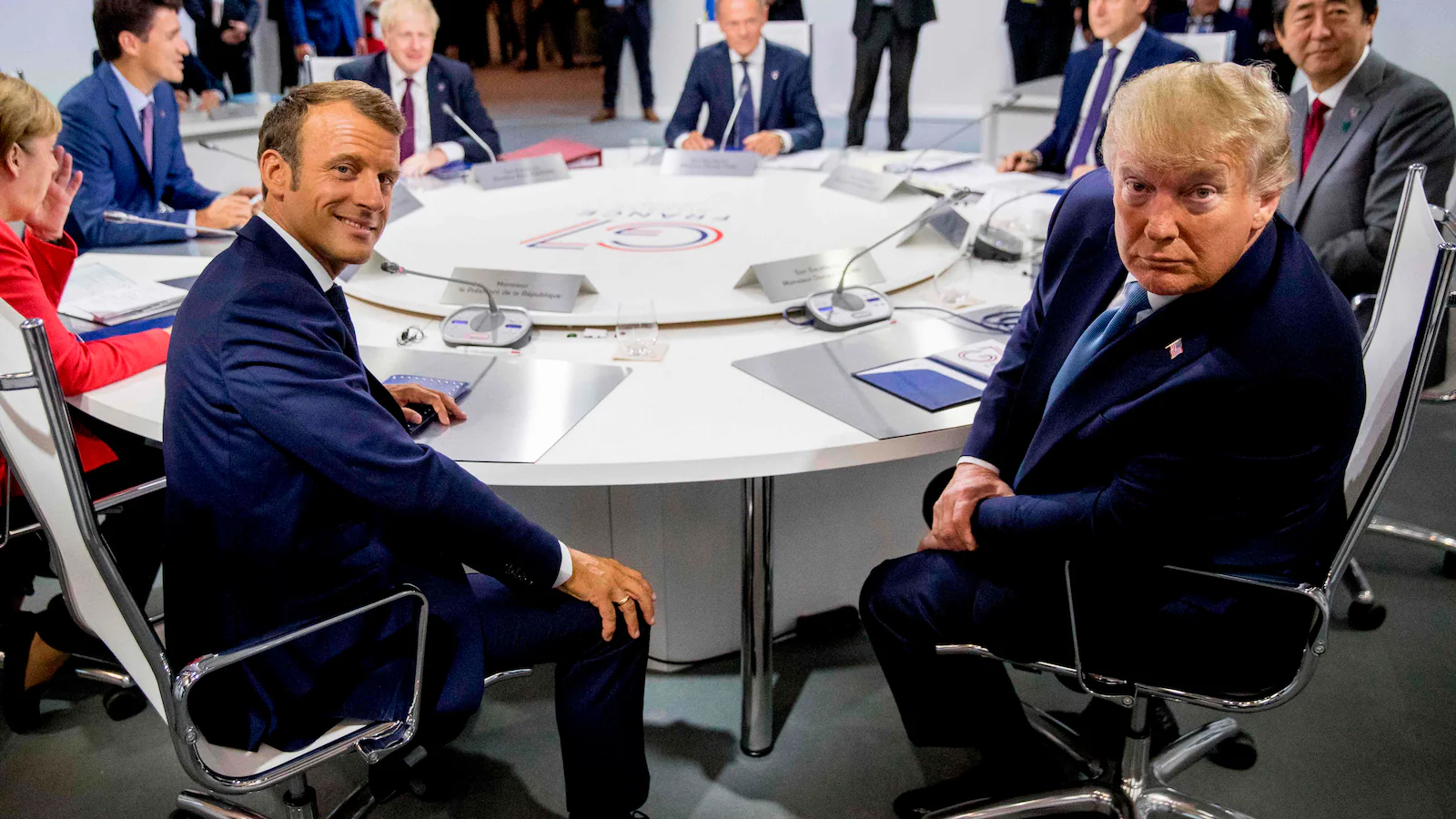
OTTAWA — What was expected to be a summit focused on economic cooperation, security, and technological innovation quickly became dominated by another issue: trade.
As leaders of the Group of Seven gathered, growing disagreements over tariffs, industrial subsidies, and economic strategy exposed deep divisions among some of the world’s largest economies.
Analysts say the latest meeting highlighted a new reality — even among close allies, trade tensions are becoming increasingly difficult to ignore.
A Summit Under Economic Pressure
The G7 nations — Canada, France, Germany, Italy, Japan, the United Kingdom, and the United States — account for a significant share of global economic output.
Historically, the group has emphasized cooperation on major international challenges.
However, slowing global growth, inflation concerns, supply-chain disruptions, and geopolitical uncertainty have intensified competition between advanced economies.
Trade has once again moved to the center of global diplomacy.
Tariffs Return to the Agenda
One of the most controversial topics at the summit involved tariffs and trade restrictions.
Several governments expressed concerns about the growing use of protective economic measures designed to support domestic industries.
Supporters argue that tariffs can strengthen manufacturing, protect strategic sectors, and reduce dependence on foreign suppliers.
Critics warn that prolonged trade disputes could increase costs for businesses, disrupt supply chains, and weaken economic growth.
The debate revealed differing visions for the future of global trade.
Industrial Policy Sparks Debate
Beyond tariffs, leaders also discussed industrial subsidies and state support for strategic sectors.
Governments around the world are increasingly investing in:
- Semiconductor manufacturing.
- Clean energy technologies.
- Artificial intelligence infrastructure.
- Critical minerals production.
- Advanced manufacturing.
While these programs are designed to strengthen national economies, some countries worry that aggressive industrial policies could distort competition.
Officials called for continued dialogue in order to avoid escalating economic tensions.
Businesses Seek Stability
Business leaders are closely monitoring developments.
Multinational companies depend on predictable trade rules and stable supply chains to make long-term investment decisions.
Many executives fear that escalating trade disputes could create uncertainty across key industries, including:
- Automotive manufacturing.
- Technology.
- Energy.
- Agriculture.
- Pharmaceuticals.
- Aerospace.
Companies operating globally are increasingly adapting their strategies to manage geopolitical risks.
The Semiconductor Factor
Semiconductors emerged as one of the summit’s most strategic topics.
Advanced computer chips have become essential for economic competitiveness, artificial intelligence, and national security.
Governments are investing billions of dollars to expand domestic semiconductor production and reduce supply-chain vulnerabilities.
At the same time, export controls and trade restrictions continue reshaping the global technology landscape.
Experts argue that future economic leadership may depend heavily on access to advanced computing infrastructure.
Economic Security Becomes a Priority
The concept of economic security featured prominently throughout discussions.
Many countries are seeking to balance open markets with the need to protect critical industries and essential supply chains.
Recent global disruptions have demonstrated how vulnerable highly interconnected economies can be.
As a result, governments are increasingly emphasizing resilience alongside efficiency.
This shift could permanently alter international trade patterns.
Cooperation Despite Differences
Despite disagreements, G7 leaders emphasized their commitment to maintaining strong economic relationships.
Diplomats stressed that dialogue remains essential for preventing disputes from escalating into broader trade conflicts.
Observers note that while tensions exist, the G7 countries continue to share many common interests, including economic stability, innovation, and global security.
Looking Ahead
The latest G7 summit demonstrated that trade policy is once again becoming a defining issue in international relations.
As countries compete to strengthen domestic industries while maintaining global partnerships, balancing national interests with international cooperation will remain challenging.
For businesses, investors, and consumers, the outcome of these debates could have significant implications.
The future global economy may depend not only on technological innovation, but also on whether major economies can avoid a prolonged trade war.
For now, the trade war at the G7 remains unresolved — and the world is watching closely.